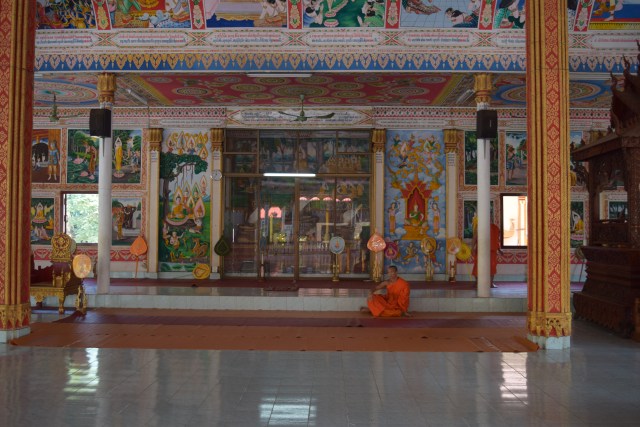
Of the many temples that we visited during our time in Vientiane, Wat That Luang Neua was one of the most interesting. From the reclining Buddha statue to the colorful images depicting the life of Buddha, it is truly a beautiful temple. Located near the famous Pha That Luang, it is certainly worth taking the time to visit during a walking tour of Vientiane.
Reclining Buddha at the TempleColorful PaintingsGolden StatueMonks in the TempleView of the Temple CeilingCeremonial Items Inside the Temple
The golden statues are all quite interesting as you walk around the temple grounds. The temple itself is very open and has paintings depicting the life of Buddha all over the ceiling. The colors are so vibrant and the paintings are so interesting that one could spend hours looking at them. Local residents were setting up tables to provide food to the monks who worship there. It was certainly fascinating for us to see them going through their daily rituals.
More Monks in the TempleSetting Up for LunchEntrance to a Temple BuildingOpenness of the TempleDetailed ArtworkBuddha Statue
There are so many wats, or temples, to see in Vientiane, but Wat That Luang Neua is definitely a highlight. Considering how hot it was during our time in Vientiane, any time in the shade or inside of building was certainly a welcome relief. Going to several of the temples to see how they vary is something that we would definitely recommend.
Standing In the Temple CourtyardVisually Stunning TempleDetails on a Temple BuildingTelling the Story of BuddhaDepiction of a Statue that Was Under ConstructionAnother View of the Golden StatueTemple BuildingClose-Up of the Reclining Buddha
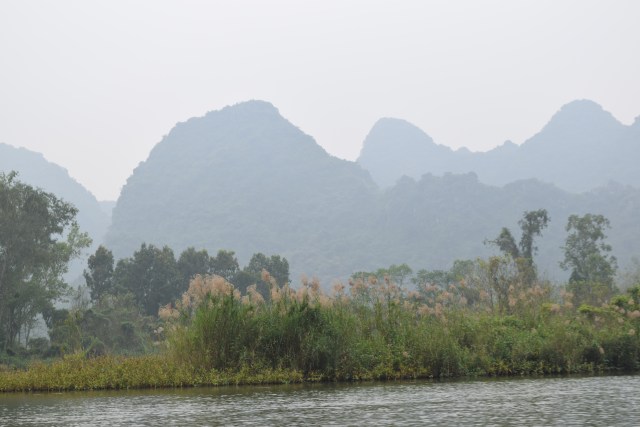
Perfume Pagoda is a complex of Buddhist temples located about a couple of hours outside of Hanoi in Vietnam. At the heart of the complex is Huong Tich Cave and within the cave is Chua Trong or the Inner Temple. During the festival time, from late January through early March, thousands of people visit the temple and the 2.5 km (1.5 mile) path that takes you up to the cave is lined with vendor stalls selling food, gifts, and objects to use as an offering. In order to reach the Perfume Pagoda complex, you need to take an almost hour long boat ride (less if you take a motorized boat) through the beautiful countryside.
Chua Trong Inside the CaveView from the RiverMarker Within the CaveItems for Sale in a StallPrayer Mat
There is a cable car that will also take you to the summit where Huong Tich Cave is located and for the nominal price it is worth it. During the festival, however, the lines for the cable car are so long that it is faster to walk and even that is very slow going as you weave along the foot path. The views from the cable car are also worth it as it allows you to get above the path and see how it winds through the forest. After taking the cable car to the summit and visiting the cave and Chua Trong, we did walk down the path in order to get an appreciation of it. There were only a few stalls open during our visit and needless to say, with less visitors, they worked hard to try to get us to buy something.
Cable CarDragon Shaped FormationExiting Huong Tich CaveTemple Building on the Side of the MountainMonks Buying Items
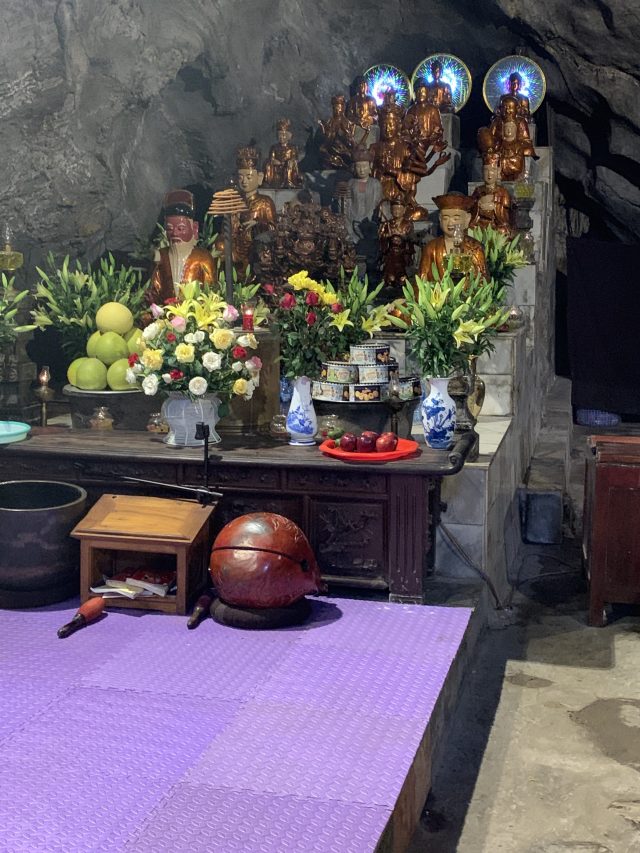
From the cable car, you walk down a steep set of stairs that take you to the entrance of the cave. The opening of Huong Tich Cave is said to resemble the mouth of a dragon and there is a rock formation inside of the cave that also looks like a dragon. There is a ceremonial altar at the entrance and at the deepest part of the cave is the inner temple, Chua Trong. As we understand it, it is the only pagoda located inside of a cave and there are many different statues of Buddha in the temple. Even without the temple, the inside of the cave is interesting to see with all of the typical stalagmites and stalactites.
Offerings Inside of the CaveCave FormationsExploring the Inner TempleOfferings at the Cave EntranceView from the Summit
When visiting Hanoi, we’d definitely recommend going on the Perfume Pagoda tour, but only after doing Halong Bay and a Ninh Binh tour. The scenery is beautiful and the history, which goes back hundreds of years, and culture is fascinating. It is probably interesting to see during the festival season, but since we don’t like crowds, we were fine with visiting a couple of months before it started. The tour will take a full day from Hanoi, lasting about 10 hours from hotel pick-up to drop-off.
Statues Around the CaveWalking Down the TrailHeading Back Up the StairsColorful Rooster on the TrailMouth of the CaveInteresting Features Within the CaveScenery from the Cable Car Platform
Wat Si Saket is a Buddhist temple and museum in Vientiane, Laos. There are many wats, or temples, in Vientiane and Wat Si Saket was the first that we visited during our day-long tour of Vientiane’s inner city. Built in 1818, it might be the oldest wat as many of the wats have been destroyed and rebuilt due to the many wars and invasions of Laos. Because it is a museum as well as a temple, there are many ancient Buddhist statues on display within the temple grounds.
Reclining BuddhaAncient Buddha Statues on DisplayDrum TowerTemple Prayer BuildingOfferings and Golden StatuesDetails on the Roof
The Wat Si Saket was built in the Siamese style of Buddhist architecture, making it different than a lot of the other wats that we visited during our tour. The architecture and artwork were definitely fascinating with so many different details on the various buildings. As with most wats, there were stupas all around the exterior wall of the temple where important Buddhist priests and other citizens are entombed. There is also a typical drum tower, which the priests use to call people to the temple for prayer.
Walking the Grounds of Wat Si SaketStupas in the GardenEntrance to the WatBuddha StatueMore Ornate StatuesGong at the Main Temple
Because the inner city of Vientiane is so walkable, it is easy to visit multiple wats in a single day. Starting with Wat Si Saket is a perfect starting point since it is open to the public from 8:00 to 17:00 seven days a week. It might seem strange to have so many temples in a country that is communist, but as it was explained to us, the political system is communist, the economy is capitalist, and the majority of the people are Buddhist.
Colorful Artwork of NagaDifferent Style of StatueMore Stupas in the GardenTemple GroundsMore Buddha StatuesTemple RoofGolden Buddha StatuesMore of the CourtyardColorful Flowers