Mua Cave in the Ninh Binh Province of Vietnam

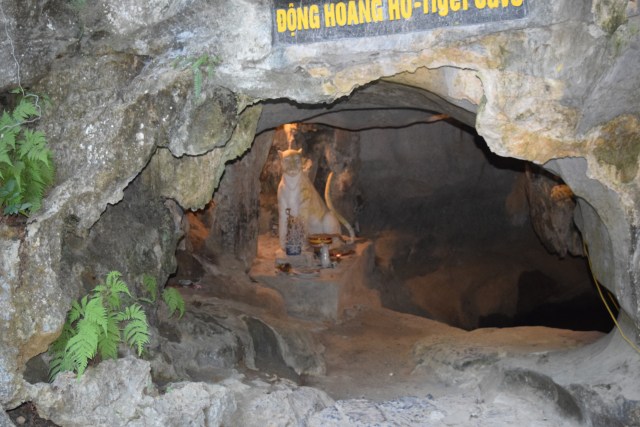
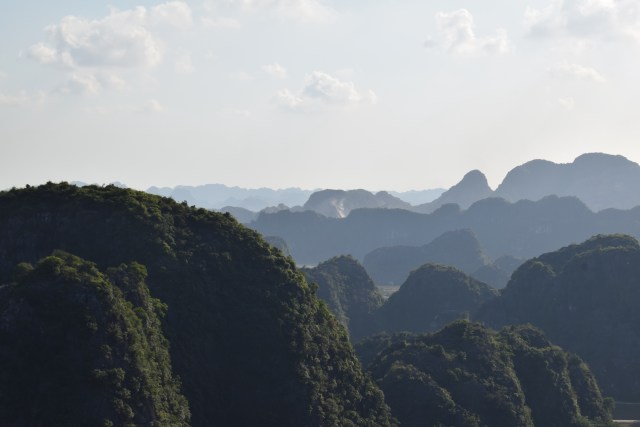
When visiting Hanoi in Vietnam, planning a day trip to the Ninh Binh province is well worth the time. You will likely have the choice to visit several different locations during your visit and choosing to go to Mua Cave should be one of them. It isn’t about seeing the cave, there are plenty of other caves that are more impressive, but it is all about climbing the over 540 stairs to see the incredible views of the countryside.

DSC_2823
Park Sitting Below the Staircase
DSC_2830
Beginning of the Staircase
DSC_2862
Amazing Views of the Ninh Binh Province

To be clear, the steps are steep and uneven throughout much of the ascent to the top, so bring plenty of water and take your time. Despite the effort to reach the summit, the views along the way as well as when you reach the top are well worth the muscle pain. At the base of the mountain is a beautiful park with statues of horses and a fountain. It is a perfect place to sit in the shade and unwind after completing the long climb up the staircase.

DSC_2840
Winding Staircase
DSC_2846
The Lower Viewing Point
DSC_2835
Rice Paddies at the Base of the Mountain

As you near the top of the stairs, you will have the choice to go to one of two viewing areas, one lower and one that continues all of the way to the top. Obviously you can do both, but we chose just to head all of the way up to the top. Looking down, you can see the Ngo Dong River and all of the boats paddling their way through Tam Coc (or three caves). We had done the Tam Coc tour earlier in the day, so seeing it from above was a truly different experience.

DSC_2851
Boats Doing the Tam Coc Tour
DSC_2850
Simply Beautiful
DSC_2829
Tiger Cave

Ninh Binh has been called “the Halong Bay of inner Vietnam” and the scenery will definitely let you know why. By the time we reached the top, it was late in the afternoon and the mist was rising up from the jungle vegetation below, making for stunning views. It was as difficult going down as it was climbing to the top, so give yourself plenty of time for going both directions. It is very popular with tourists for obvious regions, so expect there to be plenty of people joining you as you wind your way up the staircase.

DSC_2841
Looking Up from the Staircase
DSC_2826
Horse Statues in the Park
DSC_2857
Looking Towards the Horizon
DSC_2833
Another View of the Summit

Fortress with a View in Budapest, Hungary

The Citadella is a fortress that sits on top of Gellért Hill on the Buda side of the Danube River. The Liberty Statue that is located next to the citadel can be seen from throughout the downtown area of Pest. The bronze statue features a woman raising a palm leaf toward the sky and, although it was built by the Soviet Union, it still represents Hungary’s freedom from Nazi occupation. As interesting as the fortress and statues are, the main reason for making the trek to the top of Gellért Hill is for the views of Budapest. You can see the Buda Castle District, the Parliament Building, St. Stephen’s Basilica, the Danube River, and the heart of Budapest.

DSC_0440
Liberty Statue
DSC_0445
View of the Danube River
DSC_0455
Vendors Outside of the Fortress
DSC_0419
Looking Up at the Fortress and Liberty Statue from the River

We walked from our hotel down to the river where we crossed Liberty Bridge to start our hike to the top of Gellért Hill, which is 771 feet above the river below. The winding path is fairly steep and takes you through a wooded area as well as by the St. Gellért Monument. The hill gets its name because it is the location where St. Gellért was brutally killed and apparently tossed from the hill. It took us about an hour to make the walk to the top of the hill, but we stopped several times to take in the scenic views at the various overlooks.

IMG_0936
Stairs Leading to the Paths
IMG_0951
Walking Around the Fortress
IMG_0941
Liberty Statue and Citadel Wall
DSC_0427
View of Buda Castle from the Citadella

As we reached the Citadella at the top of the hill, we had worked up quite a thirst and were quite happy to find out that their were several vendors selling food and drinks next to the fortress walls. In addition to the Liberty Statue, there were also two smaller statues that remain from the original four statues that were erected at the site. The other two statues were moved to Statue Park some time after 1947 when Liberty Statue was erected. Once at the top of the hill, we spent about thirty minutes walking around the fortress and statues. We happened to go on a Saturday and there was a mix of tourists as well as locals enjoying the beautiful weather.

DSC_0476
Bird Along the Trail to the Top of Gellért Hill
DSC_0430
St Stephen’s Basilica and the City of Budapest
DSC_0452
Fortress Wall
DSC_0438
One of the Two Smaller Statues

There are many wonderful sites to visit while in Budapest and the Citadella is certainly one of them. We would definitely recommend going on a clear day in order to take full advantage of the incredible views of the city.

DSC_0421
St. Gellért Monument
DSC_0458
Buda Castle District
DSC_0435
Parliament Building
DSC_0432
Unique Structure


St. Stephen’s Basilica in Budapest

One of the focal points for any visit to Budapest is the St. Stephen’s Basilica. Located in the Inner City District, it is in the heart of the old town region with all of the restaurants and shopping. Visiting the basilica is free, but there is a recommended donation of 200 Ft (~2 euros) for entering the cathedral. The inside of the cathedral is quite beautiful with all of the ornate gold arches and wonderful domes. Another highlight of the basilica is the observation deck, which has spectacular panoramic views of the city from a different perspective than those of the Castle District or the Citadel.

DSC_0181
The Front of the Basilica with the Bell Towers
DSC_0228
One of the Ornate Interior Dome
DSC_0203
Focal Point of the Basilica
DSC_0302
View from the Observation Deck
DSC_0186
Golden Arch
DSC_0299
Roof of the Bell Tower

We actually visited St. Stephen’s Basilica twice, once on a rainy day to see the interior of the cathedral and then a second time when the weather was better to go to the observation deck and take photographs of the city. Due to its central location, the cathedral can be quite crowded with tourists, so you’ll want to be patient as you walk around the cathedral. Depending on the time of year, there can also be long lines waiting to get up to the observation deck, but we didn’t have too long of a wait while we were there.

IMG_0791
Standing on the Observation Deck
IMG_0625
Walking Towards St. Stephen’s Basilica on a Rainy Day
IMG_0654
Beautiful Details
DSC_0306
Looking Down at the Pedestrian Street that Leads to the Basilica
DSC_0298
The Giant Wheel Viewed from the Top of the Basilica
IMG_0785
Amazing Views

St. Stephen’s Basilica also offers organ concerts at different times during the week and a schedule is available if you are interested. The cathedral is named after St. Stephen I, who was the first king of Hungary. Construction began in 1851 and it wasn’t completed until 1906. The domes of the basilica and the Parliament Building are the same height and they dominate the skyline of the Pest side of the Danube River. They were purposely created to be of equal height in order to symbolize the balance between church and state in Hungary.

DSC_0305
Matthias Church in the Castle District from the Top of the Basilica
DSC_0211
Famous Church Organ
DSC_0212
Looking Up at the Dome
DSC_0308
Parliament Building
IMG_0789
One of the Bell Towers
DSC_0300
Royal Palace (Buda Castle)

It is possible to get guided tours of St. Stephen’s Basilica, but we found that most people just tour the cathedral on their own. The basilica is one of the most important sites to visit during a trip to Budapest and we would definitely recommend taking the time to go the observation deck for the views.

IMG_0668
Memorial Inside of the Basilica
DSC_0221
One of the Many Arches
DSC_0310
Ornate Roof in the City
DSC_0318
The Streets of Budapest
DSC_0204
Glowing Statue
DSC_0206
Beautiful Pulpit