During our trips to South America, we have come across some very interesting plants and trees. Especially when it comes to visiting the Amazon, there are often pops of bright color amid the mostly dense green foliage. Although they came in many different colors, the vibrant red flowers and leaves certainly stood out. Some of them were fairly normal looking, but others are very different and unique. We often take photographs of wildflowers during our hikes, so it seemed natural to capture images of these flowers as we trekked around the jungle. Do you take photos of seemingly random flowers or plants as you travel or hike?
Budding FlowersIs It a Seed Pod?Pop of ColorVibrant RedColorful LeavesFairly Average FlowerUnique FlowerReflection on the RiverIn the Darkness of the JungleRed LeavesGetting Ready to Open
During our trip to Ecuador, we stayed at the Napo Wildlife Center in the Amazon Rainforest. Considering that we were deep in the Yasuni National Park and far away from any city, the amenities at the lodge were actually very nice. We had hot water, plenty of fresh food cooked three times a day, and even a fully stocked bar. There was also Wi-Fi, but it was a little spotty and didn’t always work. The lodge and bungalows sit on the shore of Añangu Lake and we had to paddle in canoes for a couple of hours to reach the lake from the river.
The Main Level of the EcolodgeThe Lodge Complex from the LakeView from Our Hut
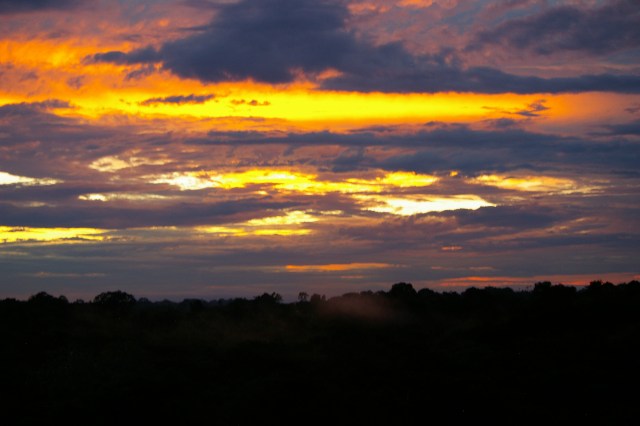
One of the nice features of the ecolodge is the observation deck. There are several levels of the tower, each with a different view of the canopy. We enjoyed a beautiful sunset on our first night there and could often hear the howler monkeys all around. Sitting on the upper decks of the tower was a wonderful way to find a bit of a breeze and beat a little of the intense jungle heat. There was also some native art on display as well as a library if you were interested in doing some reading. We were often too tired from a day of trekking in the jungle to do much other than eat and sleep.
Sunset Over the Amazon RainforestLooking Down from the Observation DeckColorful Artwork
If you wanted to enjoy the sounds of the lake, there were plenty of lounge chairs in the boathouse, but swimming was not an option as caiman could often be seen near the shores of the lake. If that isn’t enough to keep you from jumping into the lake, anaconda snakes were also known to be in the area. Not every animal was threatening, though, we were constantly being serenaded by birds and they could always be found in the trees outside of our hut.
Looking Down the ShoreLounge ChairsOne of Our Neighbors
If anyone is planning on going to the Yasuni National Park in Ecuador, we would highly recommend staying at the Napo Wildlife Center. Run by the local Amazon tribe that owns the lodge, they make every effort to ensure that your stay is pleasurable while providing daily tours that truly emerse you into the jungle.
Our trip to Bolivia was one of the most interesting trips that we’ve ever taken and we had a lot of wonderful experiences while we were there. As with all countries, Bolivia is a very complex nation with a lot of contradictions, aspirations, and impediments to success. Everyone we met along our journey was extremely nice and helpful, but they all expressed a similar impression of their country. It is a land rich with potential, but that potential is being squandered due to mismanagement and corruption from the political leaders who rule the country.
High Mountain Lake Andes Mountains across the Plain Farmland on the Mountains
Despite the success of surrounding countries like Peru, Chile, and Argentina, Bolivia seems to be stubbornly holding onto the past, which is great for a visitor, but not necessarily good for its people. While these other countries have embraced tourism, the people of Bolivia may want travelers to come to their country, but seeing the sites that the country has to offer is not an easy endeavor. Just getting from one place to another can be risky and life threatening or is often very expensive. Because of that, we were able to only see a fraction of what the country has to offer, but it isn’t going to deter us from visiting Bolivia again, as we truly want to see more of this wonderful country.
Driving in the Jungle Farming the Land Hard Work the Old Way
From our conversations with people in the United States, people often know nothing or very little about Bolivia. Usually the conversation goes something like, “isn’t that where they wear the bowler hats?” or “that’s where Butch Cassidy and the Sundance Kid were killed, right?”. Perhaps they’ve heard of La Paz, but few associate it with the Inca empire or relate to the ruins the same way that they might refer to Machu Picchu in Peru. As far as the bowler hats, people are partially correct. There are three major tribes that trace their ancestry back to before the Incas and each has their own traditional dress and language. In fact, as you venture out of the cities and into the countryside, you are likely to meet people who speak no Spanish at all, the standard language of Bolivia and South America, but who speak their ancestral language. We saw people from two of those major groups, Aymara and Quechua. Outside of Cochabamba, where we spent our first week in Bolivia, the people are Quechua and the women wear white hats, while outside of La Paz the people are Aymara and are the ones that where bowler hats.
Potato Market Aymara Woman Women from Cochabamba
Seventy percent of the land in Bolivia is covered by jungle and rainforest, while the rest is either high in the Andes mountains or on open plains, such as the Uyuni Salt Flats. In fact, the salt flats are probably Bolivia’s biggest tourism draw at the moment, but something that we didn’t get the opportunity to see during our trip because we simply didn’t have the time or money to make it there. Road conditions in Bolivia are horrendous and travel by bus can take days or even weeks to get places. You can fly to some smaller cities, but the prices are usually outrageous. However, to and from the major cities, La Paz, Cochabamba, and Santa Cruz, flights are not only convenient, but they are cheap as well. In fact, we flew with BOA (Boliviana de Aviación), which had flights from La Paz to Cochabamba leaving about every hour and a half and it was one of the best airline experiences we’ve ever had. Our round-trip tickets cost the two of us a total of less than $150 USD and our flights were on time and the service was excellent.
Rough Road Traffic on Dirt Roads Flight into Cochabamba
The ancient ruins that we were able to see, both Inca and pre-historic, were definitely one of the highlights of our trip. Oddly though, the Bolivian people don’t have much of an interest in their own history and therefore these sites are not as fully examined as they would be in other countries and because there isn’t a lot of tourism, they aren’t visited often. Being the only people at a site, just us and our guide, made seeing them even more enjoyable, but at the same time made us rather sad that these historical sites were not being relished and cared for in the way that they truly deserve. They are very proud of the fact that they haven’t rebuilt any of the sites in order to show what they might have looked like, but there are also probably many more buildings and ruins left undiscovered and buried beneath the land. Other than the time that we spent in Copacabana, on the shores of Lake Titicaca, we saw very few tourists anywhere during our trip. And the people that we saw in Copacabana were most likely just passing through on their way to or from Peru, which is on the other side of the lake.
Tiwanaku Incallajta Statue at Tiwanaku
The other common perception of Bolivia, at least in the United States, is that it is the country where most of the cocaine comes from. Unfortunately that is true and growing coca leaves is one of the largest crops that Bolivia produces, much of it legally, but there is also a fair amount of illegal growth as well. It is common to see people chewing on coca leaves and it was even on our breakfast buffet at the hotel in La Paz. Other than coca leaves, the country grows everything that it needs in very fertile soil, including potatoes, strawberries, bananas, tangerines, lemons, and quinoa. Unfortunately, the demand from other countries for the cocaine that is made from the coca leaves has made that the largest cash crop in the country. It has also created the culture of political corruption as well as a desire not to have prying eyes from tourists, which is probably part of the reason that they make it difficult for tourists to visit the country.
Drying the Coca Leaves From Farm to Table? Coca Plants
Bolivia truly is a fascinating country with plenty to offer the world. Right now it is like a gem that has yet to be polished to reveal its true splendor, but there will likely come a day in the near future when tourists flock to Bolivia to see all that it has to offer. From the animals of the jungle, the amazing Amazon river, the high ranges of the Andes, dinosaur tracks, ancient ruins, humble cities and friendly people, there is much to see and do in Bolivia, if people are willing to venture there. We had heard a lot about petty crime and pickpockets before we left and were on our guard everyplace that we went, but we found that our concerns were pretty much unnecessary. Every country has places where crime is prevalent and people should be wary, but we didn’t find Bolivia to be any worse than any other country that we’ve visited. We hope that more people will visit this incredible country and we will definitely return again. Maybe on our next trip we won’t be the only foreigners that we see as we explore the many treasures that Bolivia has to offer.