Piazza Navona in Rome, Italy

DSC_2404
Close Up on the Fountain

The Piazza Navona is a famous square in Rome that was built on the site of an ancient, open space stadium from the 1st century. Today it is busy with local artists, restaurants and cafes, local residents, and tourists. With its large Egyptian obelisk, the Fountain of the Four Rivers demands attention in the center of piazza. The square was defined as a public space in the 15th century where it hosted the city market. Later, during the reign of the pontificate of Innocent X, the square became significant for its Baroque architecture with the focal point being his family palace, the Palazzo Pamphili.

DSC_2402
Fountain of the Four Rivers and the Palace
DSC_2403
Obelisk and the Bell Tower
DSC_2406
Unique Statues

There are two other fountains in the square, one on the southern end of the square being the Fontana del Moro, which has four Tritons sculpted by Giacomo della Porta, and on the northern end is Fountain of Neptune. Even at night, the Fountain of the Four Rivers is beautiful to see as the basin is lit up to highlight the statues at the base of the obelisk. Crowds remain in the piazza well into the evening, especially on warmer nights. We stayed at a boutique hotel that was situated on the square, so we had wonderful views of the people enjoying the beautiful area.

IMGP2306
Palace Dome
DSC_2243
Fountain at Night
IMGP2302
Beautiful Statues

If you enjoy people watching, then the piazza, with its outdoor cafes, is a perfect location for you. At one point, we even watched as a marching band of children marched passed the fountains. There are also street artists playing music and a variety of painters offering unique paintings of famous sites in Rome. During our time there, we always saw people sitting on the benches and eating a meal, however we chose to have a glass of wine at several of the locally owned restaurants.

DSC_2400
Marching Band
DSC_2049
Palace
IMGP2304
Palace Bell Tower

Perhaps this square is not as well known as some other locations in Rome, but it is certainly a top place to visit when coming to the city. It was featured in Dan Brown’s Angels and Demons and several scenes from the film adaptation were filmed in the piazza. With all of the local restaurants in the surrounding streets as well as the square itself, it is a great place to spend a few hours and relax in the bustling city.

DSC_2405
Another Statue
DSC_2237
Fountain at Dusk from Our Room


The Alhambra in Granada, Spain

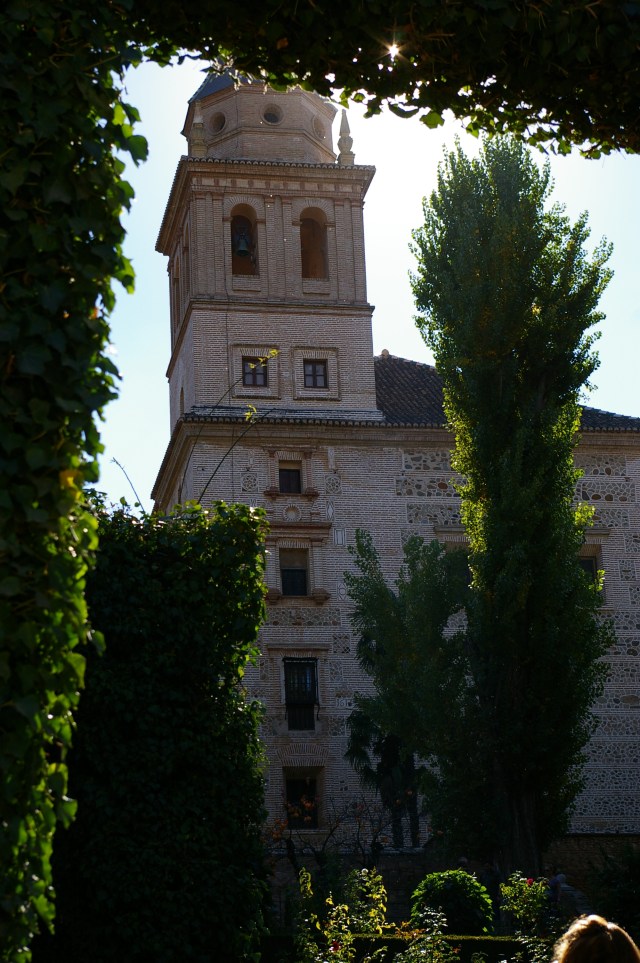
We really enjoyed traveling around Southern Spain and one of the highlights of our trip was staying a couple of days in Granada and visiting the Alhambra fortress and palace. Before traveling to Spain, we weren’t aware of how much of influence the Moors had on the region. The Alhambra is a magnificent example of Moorish architecture and the colorful details are amazing.

DSC02695
Open Courtyard
dsc02715
Garden in Alhambra
DSC02712
View from the Fortress Walls
DSC02694
Looking out from the Palace

In the late 15th century Ferdinand and Isabella used the Alhambra as their royal court. During that period, there were some changes to reflect the Renaissance tastes of the time. What is amazing is that they found the original beauty of the Islamic palace so beautiful that they didn’t destroy most of the existing structures, but just augmented it. The gardens that were added are still absolutely breathtaking and you could literally spend the entire day just walking around them.

DSC02592
One of the Many Gardens
DSC02594
Beautiful Garden
dsc02718
View of One of the Gardens
DSC02581
Another Courtyard

One of the most interesting features of the Alhambra is its use of water and the unique delivery system. Water is brought from an aqueduct and then runs down, even along the stairs, to feed the various fountains and ponds on the palace and fortress grounds. We enjoyed all of the fountains, but the Court of the Lions, with its fountain surrounded by stone lions is one of the most interesting.

dsc02714
Another Fountain in Alhambra
dsc02717
Water Coming Down One of the Chutes of the Aqueducts in Alhambra
DSC02699
Lion Fountain
IMGP4053
Looking over the Complex

You will definitely need a full day to see everything that the Alhambra has to view. There is the palace itself with its stunning mosaic walls and the fortress walls with the spectacular views of Granada. No matter what time of year that you visit the Alhambra, you will want to purchase your tickets weeks in advance or you won’t be able to get them. In order to maximize our time in the Alhambra, we ate lunch at the Hotel America that is actually located on the grounds of the Alhambra. The food and atmosphere was amazing and was well worth the somewhat higher prices.

DSC02720
Enjoying Lunch
DSC02719
Restaurant Courtyard
DSC02756
Looking Up at the Outside of the Alhambra
DSC02700
Moorish Architecture

No visit to Granada would be complete without a visit to the Alhambra. Washington Irving made this palace and fortress famous in his book Tales of the Alhambra and it is definitely deserving of the notoriety. The history of the Alhambra is so fascinating that we definitely recommend getting a book on it as there are so many interesting facts to learn about the wonderful place. This UNESCO World Heritage Site is definitely worthy of the honor.

IMGP4043
View of One of the Towers at Alhambra
IMGP4051
Looking out over Granada
IMGP4047
Fortress Walls
DSC02735
Walking the Fortress Walls

The Residenz in Würzburg

Taking a tour of the Residenz in Würzburg, Germany, was definitely a highlight of the weekend that we spent in the quaint little city. You can usually count on finding a palace, castle, and a cathedral or dom in most historic European cities and Würzburg was no different. The palace, which is called the Residenz, is one of those truly beautiful places that is definitely worth visiting. We were there during the winter, so we didn’t get to enjoy the beautiful gardens, but the interior, with its Baroque/Rococo architecture and artwork more than made up for not walking through flower lined paths.

IMGP0737
Franconia Fountain
IMGP0732
Grand Entrance
img_3194
Ceiling in the Residenz

There were many Prince-Bishops who resided at the Residenz during the time that it was constructed, although the end result is not disjointed or lack cohesion. The foundation for the palace was first laid in 1720 and construction was completed around 1780. As with many cities and palaces in Germany, the Residenz suffered tremendous damage during World War II and reconstruction work continued from 1945 to 1987. Great care was taken to restore it back to as close to it’s original grandeur as possible at a great expense, but the result is magnificent. In 1981, the Residenz was added to the UNESCO World Heritage List, which is richly deserved.

IMG_3185
Us at the Palace
IMGP0731
Walking to the Palace
IMGP0739
More Fountain Figures

The grand staircase is by far the most spectacular part of the palace. With it’s Baroque artwork, amazing frescos, and 3-D reliefs, there is so much detail to enjoy. Unfortunately were not able to take any photos within the palace, but we enjoyed seeing all of the beautiful artwork. Outside of the palace, the Franconia fountain is the dominating feature. It pays homage to the artisans whose artwork adorns the palace walls and ceilings.

IMGP0740
Back of the Fountain
IMGP0728
The Residenz

Würzburg may not be top on most lists of places to visit in Germany, but we found that it was definitely worth a stop. Obviously there is more to see than just the Residenz, but we would highly recommend taking a tour if you get the opportunity.