Discovering the Beauty and History of Alhambra Palace in Granada, Spain

We really enjoyed traveling around Southern Spain and one of the highlights of our trip was staying a couple of days in Granada and visiting the Alhambra fortress and palace. Before traveling to Spain, we weren’t aware of how much of influence the Moors had on the region. The Alhambra is a magnificent example of Moorish architecture and the colorful details are amazing. It is one of those rare locations where every corner that you walk around brings you a new and fascinating sight to see.

DSC02695
Open Courtyard
dsc02715
Garden in Alhambra
DSC02712
View from the Fortress Walls
DSC02694
Looking out from the Palace

In the late 15th century Ferdinand and Isabella used the Alhambra as their royal court. During that period, there were some changes to reflect the Renaissance tastes of the time. What is amazing is that they found the original beauty of the Islamic palace so beautiful that they didn’t destroy most of the existing structures, but just augmented it. The gardens that were added are still absolutely breathtaking and you could literally spend the entire day just walking around them.

DSC02592
One of the Many Gardens
DSC02594
Beautiful Garden
dsc02718
View of One of the Gardens
DSC02581
Another Courtyard

One of the most interesting features of the Alhambra is its use of water and the unique delivery system. Water is brought from an aqueduct and then runs down, even along the stairs, to feed the various fountains and ponds on the palace and fortress grounds. We enjoyed all of the fountains, but the Court of the Lions, with its fountain surrounded by stone lions is one of the most interesting.

dsc02714
Another Fountain in Alhambra
dsc02717
Water Coming Down One of the Chutes of the Aqueducts in Alhambra
DSC02699
Lion Fountain
IMGP4053
Looking over the Complex

You will definitely need a full day to see everything that the Alhambra has to view. There is the palace itself with its stunning mosaic walls and the fortress walls with the spectacular views of Granada. No matter what time of year that you visit the Alhambra, you will want to purchase your tickets weeks in advance or you won’t be able to get them. In order to maximize our time in the Alhambra, we ate lunch at the Hotel America that is actually located on the grounds of the Alhambra. The food and atmosphere was amazing and was well worth the somewhat higher prices.

DSC02720
Enjoying Lunch
DSC02719
Restaurant Courtyard
DSC02756
Looking Up at the Outside of the Alhambra
DSC02700
Moorish Architecture

No visit to Granada would be complete without a visit to the Alhambra. Washington Irving made this palace and fortress famous in his book Tales of the Alhambra and it is definitely deserving of the notoriety. The history of the Alhambra is so fascinating that we definitely recommend getting a book on it as there are so many interesting facts to learn about the wonderful place. This UNESCO World Heritage Site is definitely worthy of the honor.
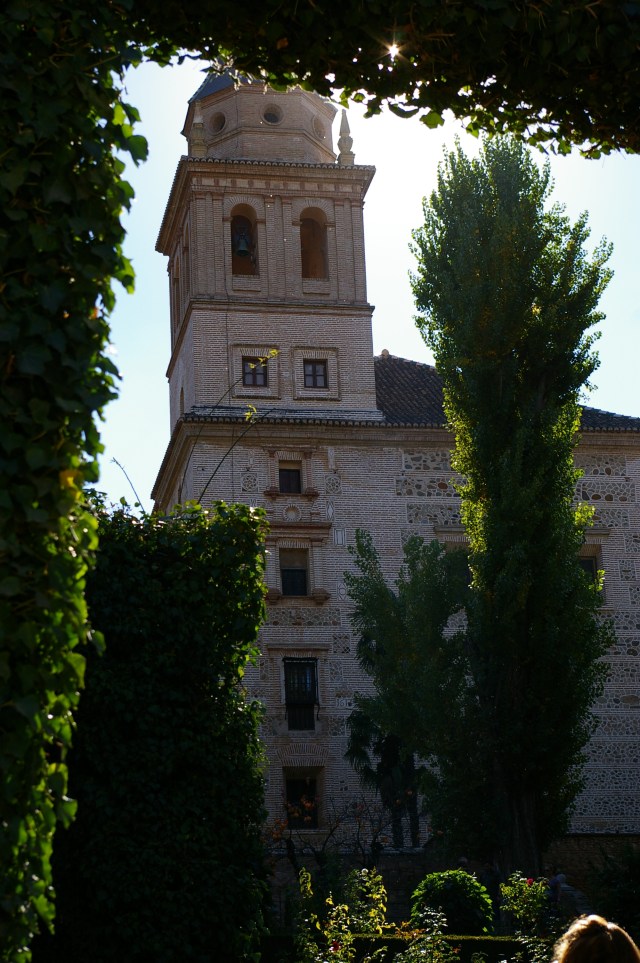
IMGP4043
View of One of the Towers at Alhambra
IMGP4051
Looking out over Granada
IMGP4047
Fortress Walls
DSC02735
Walking the Fortress Walls

Bryant Park in New York City

Although everyone knows about Central Park in Manhattan, another park worth visiting is Bryant Park. It is located between 5th and 6th avenues and 40th and 42nd streets. The park offers a variety of events throughout the year, as well as a stage where performances occur on a regular basis. It is another of the many areas within New York City where people can enjoy some green scenery and relax in the otherwise hectic city. It is quite popular for a variety of reasons, so expect there to be large crowds gathering in the park, even on weekdays.

Soothing Fountain at Bryant Park
Le Carrousel at Bryant Park
People Relaxing in the Park
Statue of William Cullen Bryant

In the park, there is a large fountain located by the stage that offers a definite sense of cooling on the hot and humid day that we visited. A favorite of families is the “Le Carrousel”, which is obviously a carrousel with whimsical animals bobbing up and down as they rotate around in a circle. For those wishing a refreshing drink or some food while sitting outside and enjoying the views of the park, there is the Bryant Park Cafe. If you are looking for more formal inside dining, there is also the Bryant Park Grill with a full-service menu.

Walking Through the Park
Some of the Many Flowers
Flowered Wall Outside of the Bryant Park Grill
People Relaxing and Eating at the Bryant Park Cafe

In addition to those items, there is an area to play ping pong, as well as other areas to play chess and checkers. The park is also adjacent to the New York Public Library. The statue of William Cullen Bryant, for whom the park is named, certainly has a prime location and cannot be missed when walking through the park. There is also a statue of Gertrude Stein in Bryant Park as well. With colorful flower beds, large shade trees, and an abundance of park benches, it is a great place to sit and relax for a while. Bryant Park might not be as famous or as large as Central Park, it is still a worthwhile place to visit when spending time in Manhattan.

Statue of Gertrude Stein
Pocket Park Sign
New York City Library and Skyscrapers Behind the Park
More Colorful Flowers

Bergpark Wilhemshöhe in Kassel, Germany

The very first trip that we took while staying in Germany was to the city of Kassel where we spent most of our time at the incredible Bergpark Wilhemshöhe. There are so many wonderful sights to see on the grounds of the largest European hillside park. Due to it’s size of 590 acres as well as the fact that it sprawls across a steep hill makes it a strenuous day of walking, but the views and historic sites are well worth the effort. The park is made up of four major points of interest, Schloss Wilhemshöhe, Lowenburg Castle, Hercules Statue, and the fountain and water feature that cascades down the hillside.

IMGP9810
Schloss Wilhelmshöhe

IMGP9847
Entrance to Lowenburg Castle

IMGP9858
Hercules Statue

As you enter the sprawling estate, Schloss Wilhemshöhe looms large across the landscape as the prominent feature for anyone who enters the park. As the one-time summer home of Kaiser Wilhem II in the early 1900’s, this magnificent palace was originally built in the 12th century as a monastery and used as a castle for centuries before becoming the summer home of the aristocratic elite. There is no doubt as to the reason that this site with it’s beautiful gardens is still the site of many fairytale weddings, which was also the case on the day that we visited.

IMGP9794
Part of the Palace

IMGP9814
Pond Behind the Palace

IMGP9786
Front of the Palace

For us, the Lowenburg Castle was one of the highlights of our visit to Bergpark Wilhemshöhe. First of all, it was the first true castle that we visited while staying in Germany. It has all of the typical features that one would expect of a castle such as the turrets and fortress walls. In order to reach the castle, you have to walk through a relatively dense forest, which certainly fosters the images of the stories of the Brother’s Grimm who came from the area and whose museum can also be found in Kassel. Walking the grounds of the castle certainly provided all of the images that we had imagined when we envisioned ourselves travelling to Germany.

IMGP9830
View of the Castle

IMGP9838
Castle Turret

IMGP9826
View of the Castle from the Trail

Hercules Statue is certainly a site that cannot be missed. Mostly due to it’s prominent location at the top of the hill and presiding above the cascading fountain, it can be seen from throughout the park. To reach the statue itself, you must scale a long series of stairs the climb steeply up the hill. We chose not to go all of the way to the top, mostly due to the fact that we had a single day in Kassel and we were quite exhausted at this point with all of the walking that we had done through the park. It was certainly an impressive sight to see.

IMGP9862
The View from the Bottom

IMGP9860
Under Construction

IMGP9866
Palace Grounds

Unfortunately for us, the cascading fountain was not running at the time that we visited, but it was still wonderful to see and we could imagine how impressive it must be when it is running. The thought that the statue and the cascading fountain were created in the early 1700’s is something truly hard to imagine. We can only imagine what it must have been like for the elite of Germany society to visit to walk along the grounds and see such an amazing sight.

IMGP9854
Bottom of the Falls

IMGP9856
Water Cascades Down from the Statue

IMGP9868
Pond on the Property

Kassel was definitely a worthwhile location for our first exploration of Germany outside of Frankfurt. Specifically Bergpark Wilhemshöhe was truly incredible to see with everything that is located inside of this incredible UNESCO Heritage site.