Top Sights for a Three Day Trip to Rome, Italy

Rome is a beautiful city with a fascinating history, interesting culture, and wonderful food. During our two week visit to Italy, we spent three full days in Rome, which was just enough time to see some of the most important sites within the city. We stayed at a boutique hotel that was right on the Piazza Navona, which gave us a central location to explore the city. Since we only had three days in Rome, we made sure to see as much as we could, but we also kept it at a casual pace with plenty of time to relax and people watch on the many restaurant patios. These were the top highlights for our visit to Rome in no particular order.

IMGP2291
View of the Colosseum from the Roman Forum
  1. The Colosseum – This is obviously one of the most recognizable locations in Rome and certainly not something to be missed. We visited during the off-season, in February, and even then the crowds can be quite large and lines can be long. There will be many tour guides outside of the Colosseum offering to take you on a tour and allowing you to jump into a shorter line.

    IMG_4717
    Walking the Museum Halls
  2. Vatican Museums – The Vatican Museums house thousands of works of art that have been collected throughout the centuries. There is too much to see in a single visit and we had to choose between focusing on sculptures or paintings during our tour of the museums. The final stop of any tour of the galleries is to see the interior of the Sistine Chapel. Often you don’t get a lot of time in the chapel because of the large crowds and long lines, but we were fortunate to get to spend as long as we wanted.

    IMG_4908
    Marble Floors and the Interior of the Pantheon
  3. The Pantheon – Surrounded by the streets of Rome, the Pantheon is a fascinating piece of history in the heart of the city. The exterior of the Pantheon reveals its true age and classical architecture, but the interior looks like it could have been built recently. The interior of the dome is quite stunning and all of the marble floors, various statues, and beautiful artwork are worth making your way through the crowds to see.

    DSC_2402
    Fountain of the Four Rivers and the Palace in Piazza Navona
  4. Piazza Navona – We were fortunate to have our hotel located right on the Piazza Navona with amazing views from our room. The fountains are quite beautiful and during the day there will be artists and vendors selling items to the tourists as well as musicians playing a variety of music. Seeing the fountains at night when they are lit up is one of our favorite memories. Another reason to visit the Piazza Navona are all of the restaurants and cafes that are located in and around the piazza.

    IMGP2310
    View of the Roman Forum from Above
  5. The Roman Forum – Walking the paths of the Roman Forum might be our favorite memory of visiting Rome. We would recommend buying a bundled ticket that includes both the Colosseum as well as the Roman Forum. It would be a shame to visit Rome and not take the time to see the Roman Forum with the thousands of years of history and culture that it represents.

    IMG_4747
    Inside of Saint Peter’s Basilica
  6. Vatican City and Saint Peter’s Basilica – Obviously the Vatican Museums are wonderful to visit, especially with the inclusion of the Sistine Chapel, but just visiting Vatican City is worth it. There is something truly special about walking through Saint Peter’s Basilica and seeing the incredible artwork and architectural details. Stepping outside of the basilica and heading into Saint Peter’s Square is equally impressive with all of its historical significance.

    DSC_2483
    The Columns and Statues of the Monument
  7. Altare Della Patria – Located about halfway between the Colosseum and the Pantheon, visiting Altare Della Patria is worth visiting for several reasons. There is an observation deck on the roof that provides stunning views of the city as well as the Piazza Venezia, which is across the busy street from the building. There are the statues of the chariots and horses that can be seen from throughout the city. It is also the location of the Tomb of the Unknown Soldier. As with much of Rome, there are also many choices of restaurants in the area.

    DSC_2527
    Trevi Fountain in Rome
  8. Trevi Fountain – This might be the second most photographed location in Rome with its beautiful statues, flowing waters, and iconic scenes from the movies. Legend has it that if you toss a coin over your left shoulder that your dreams will come true. Money is collected from the fountain and used to provide food for the less fortunate, so even if your dreams don’t come true, you’ve done a good deed. It is a wonderful place to sit and take in the beautiful scenery and enjoy a sunny afternoon.

    IMGP2331
    City Views of Rome

Regardless of how many days that you have or the time of year that you visit, all of these locations should be on your itinerary. It is difficult seeing a city with a history and culture as diverse as Rome’s in such a short amount of time, but if you relax and walk the streets to visit each of these locations, you will certainly go home with incredible memories. We certainly treasure the time that we spent in Rome and in Italy in general.

Cochabamba in the Heart of Bolivia

Located in the center of Bolivia, Cochabamba is a wonderful city to start an adventure in this diverse country. Like many cities in South America, Cochabamba has a history that was dominated by the Spanish and many of the buildings and churches date back to 1500’s. In addition to the city itself, Cochabamba is also an excellent location to launch several different short trips, including going to Carrasco National Park. Cochabamba is considered the gastronomical heart of Bolivia as well and was where we had our first taste of Pique Macho.

IMGP7276
Fountain in Downtown Cochabamba
IMGP7750
Templo de la Recoleta
IMGP8452
Dome in the Santa Teresa Convent
IMGP7836
Parrots Outside of Our Hotel
IMGP7338
Church Tower

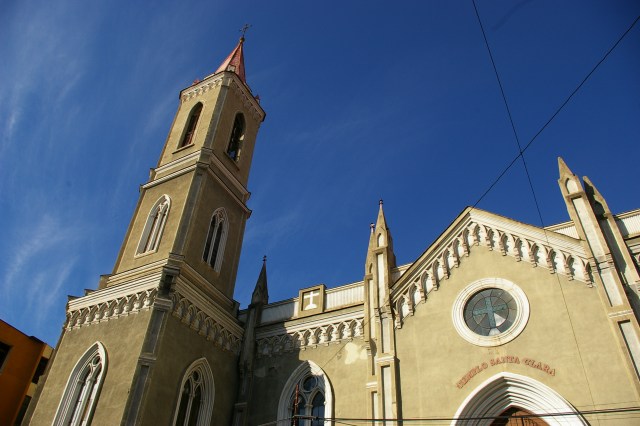
There are several churches in Cochabamba, including the Metropolitan Cathedral, Iglesia Santa Teresa with its accompanying convent, and the colorful Templo de la Recoleta. The Santa Teresa Convent has been converted into a museum and is definitely worth taking the time to tour. In addition the churches, another noteworthy site to visit is the Palacio Portales, which is a mansion that was built by a local tin baron who actually never lived in the beautiful building. The palace also offers tours in both English and Spanish and is worth spending the time to visit and to walk around the beautiful garden.

IMGP8491
Courtyard at the Convent
IMGP8488
Walking the Hallways
IMGP7319
Metropolitan Cathedral
IMGP7298
The Main Square of Cochabamba
IMGP7280
Beautiful Church

One of the things that makes Cochabamba such a wonderful city to visit is that the temperatures remain spring-like all year long. There are several parks and squares in Cochabamba with beautiful flowers that take advantage of the moderate temperatures. Families come out to these common areas to play, relax, and walk through the open air markets that are located nearby. As is typical, these parks and squares feature fountains and monuments at their centers. To get better views of the city, you can take the cable car to top of San Pedro Hill where the Cristo de la Concordia overlooks the city.

IMGP7278
Colorful Flowers in the City
IMGP7313
Families in the Main Square


IMGP7236
Cristo de la Concordia
IMGP7272
Beautiful Park Downtown
IMGP7294
Colorful Building in Cochabamba

One of the day trips that we took out of Cochabamba was to visit the ancient ruins at Incallajta. Walking around these amazing ruins was truly amazing, especially due to the fact that we were able to walk all around this historic site without any other visitors. Making our day even more interesting was the discovery of an old Spanish church on the road to Incallajta that our guide had never seen before. At the end of the day, we went to the “ghost village” of Chimboata where we saw how truly difficult life can be for the rural people of Bolivia.

IMGP8199
The Ruins of Incallajta
IMGP8366
Ghost Village of Chimboata
IMGP7895
Ancient Spanish Church
IMGP8440
Santa Teresa Convent
IMGP8151
Walking Among the Ruins of Incallajta

We also took a two-day trip into the Amazon Jungle where we stayed at an ecolodge and had our first taste of the rainforest. We took what was called a canopy tour, which was really an afternoon of ziplining from the tops of trees across rivers and canyons. The following day we took a tour in Carrasco National Park that had us hiking through the jungle, climbing into caves with rare birds and bats, and seeing cocoa fields that were intruding onto the park lands. Driving from Cochabamba to our ecolodge was probably as interesting of an experience as seeing the park itself and would prepare us for our trip down “Death Road” later during our trip.

IMG_2261
Soaring Through the Jungle
IMGP7425
An Interesting Drive
IMGP7575
Getting Into Carrasco National Park
IMGP8495
Looking Out of the Convent
IMGP7814
Palacio Portales

With so many opportunities for adventure, Cochabamba is a wonderful city to visit in the beautiful country of Bolivia. The people are extremely friendly, although you will not find too many people who speak anything other than Spanish or Quechua. We spent about five days in Cochabamba, which was about the minimum amount of time if you want to take advantage of doing some day trips from the city.

IMGP7332
Unique Architecture in Cochabamba
IMGP7300
Condors are an Important Symbol in Bolivia
IMGP7291
Statue Outside of a Church
IMGP7227
View from San Pedro Hill


The Cave Church in Budapest, Hungary

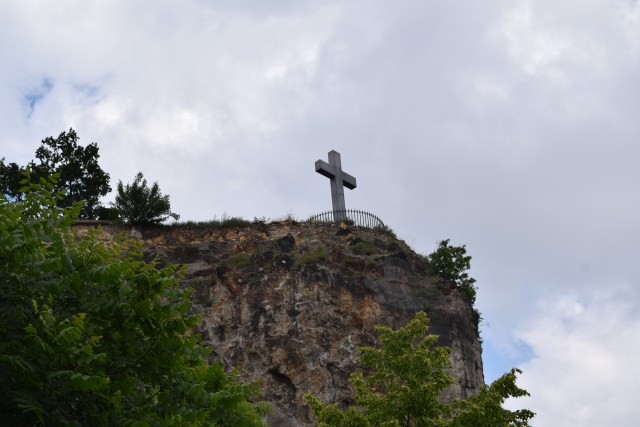
Located at the base of Gellert Hill, the hill that the Citadella (fortress) sits atop, is a system of caves. One of the caves was converted into a chapel in the 1920’s and even served as a hospital for the Germans during WWII. Known as the Cave Church, it was certainly one of the most interesting places that we visited during our time in Budapest. A cross on top of the hill denotes the location of the church, which is also located near the famous Gellert Baths where people gather to enjoy the therapeutic thermal baths.

DSC_0500
Altar Within Cave Church
IMG_0975
Seating for Religious Ceremonies
DSC_0480
Cross On Top of Gellert Hill
DSC_0506
Church Exterior Outside of the Cave
IMG_0983
Historic Artifacts
IMG_0992
Courtyard in the Church Exterior
DSC_0489
Intimidating Shadow

The atmosphere within Cave Church is interesting due to the lack of natural light and the rugged cavern walls. After its conversion to a hospital by the NAZI army during the war, it returned to serving as a church until 1951 when the Soviet Union had it shut down. The chapel was raided by the Soviet Army, the monks arrested, and the cave sealed up until Budapest regained their freedom in 1989. Today, the monks of the Pauline Order continue to operate the church and hold religious functions on the site as well as maintain it as a tourist attraction.

IMG_0974
Walking into Cave Church from the Entrance
DSC_0496
Hungarian Artwork
DSC_0502
More Art in the Cave
DSC_0485
Statue Outside of the Church
IMG_0988
Museum Display
IMG_0976
Flowers in Remembrance
DSC_0490
Main Altar

There is a nominal fee in order to enter the church and walking through the cavern will take you about thirty minutes to fully explore. In addition to the statues and artwork inside of Cave Church itself, there is also a small museum with additional historic artifacts. Exploring the church and understanding its history is certainly worth the effort of walking along the Danube below Gellert Hill. We combined it with our visit to the Citadella, which sits high above. It may not be the most well-known site in Budapest, but if your itinerary allows, we would recommend visiting.

DSC_0497
Ornate Confessional
DSC_0491
Statue Lit Up Against the Cave Wall
DSC_0486
Stained Glass Inside of the Cave
DSC_0498
Wood Carving in the Museum
DSC_0495
Painting in the Museum
DSC_0487
Wooden Statue Embedded into the Cave Wall