Cochabamba in the Heart of Bolivia

Located in the center of Bolivia, Cochabamba is a wonderful city to start an adventure in this diverse country. Like many cities in South America, Cochabamba has a history that was dominated by the Spanish and many of the buildings and churches date back to 1500’s. In addition to the city itself, Cochabamba is also an excellent location to launch several different short trips, including going to Carrasco National Park. Cochabamba is considered the gastronomical heart of Bolivia as well and was where we had our first taste of Pique Macho.

IMGP7276
Fountain in Downtown Cochabamba
IMGP7750
Templo de la Recoleta
IMGP8452
Dome in the Santa Teresa Convent
IMGP7836
Parrots Outside of Our Hotel
IMGP7338
Church Tower

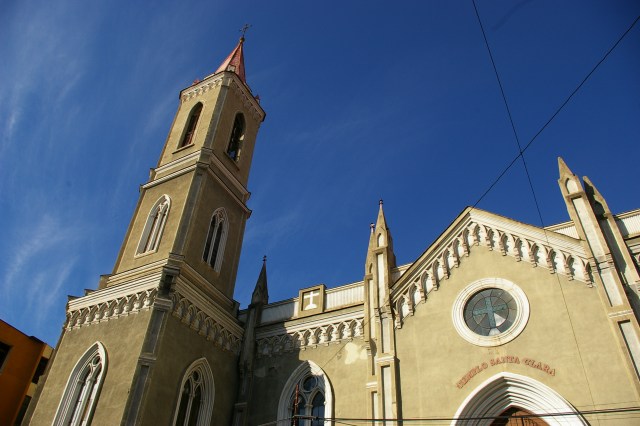
There are several churches in Cochabamba, including the Metropolitan Cathedral, Iglesia Santa Teresa with its accompanying convent, and the colorful Templo de la Recoleta. The Santa Teresa Convent has been converted into a museum and is definitely worth taking the time to tour. In addition the churches, another noteworthy site to visit is the Palacio Portales, which is a mansion that was built by a local tin baron who actually never lived in the beautiful building. The palace also offers tours in both English and Spanish and is worth spending the time to visit and to walk around the beautiful garden.

IMGP8491
Courtyard at the Convent
IMGP8488
Walking the Hallways
IMGP7319
Metropolitan Cathedral
IMGP7298
The Main Square of Cochabamba
IMGP7280
Beautiful Church

One of the things that makes Cochabamba such a wonderful city to visit is that the temperatures remain spring-like all year long. There are several parks and squares in Cochabamba with beautiful flowers that take advantage of the moderate temperatures. Families come out to these common areas to play, relax, and walk through the open air markets that are located nearby. As is typical, these parks and squares feature fountains and monuments at their centers. To get better views of the city, you can take the cable car to top of San Pedro Hill where the Cristo de la Concordia overlooks the city.

IMGP7278
Colorful Flowers in the City
IMGP7313
Families in the Main Square


IMGP7236
Cristo de la Concordia
IMGP7272
Beautiful Park Downtown
IMGP7294
Colorful Building in Cochabamba

One of the day trips that we took out of Cochabamba was to visit the ancient ruins at Incallajta. Walking around these amazing ruins was truly amazing, especially due to the fact that we were able to walk all around this historic site without any other visitors. Making our day even more interesting was the discovery of an old Spanish church on the road to Incallajta that our guide had never seen before. At the end of the day, we went to the “ghost village” of Chimboata where we saw how truly difficult life can be for the rural people of Bolivia.

IMGP8199
The Ruins of Incallajta
IMGP8366
Ghost Village of Chimboata
IMGP7895
Ancient Spanish Church
IMGP8440
Santa Teresa Convent
IMGP8151
Walking Among the Ruins of Incallajta

We also took a two-day trip into the Amazon Jungle where we stayed at an ecolodge and had our first taste of the rainforest. We took what was called a canopy tour, which was really an afternoon of ziplining from the tops of trees across rivers and canyons. The following day we took a tour in Carrasco National Park that had us hiking through the jungle, climbing into caves with rare birds and bats, and seeing cocoa fields that were intruding onto the park lands. Driving from Cochabamba to our ecolodge was probably as interesting of an experience as seeing the park itself and would prepare us for our trip down “Death Road” later during our trip.

IMG_2261
Soaring Through the Jungle
IMGP7425
An Interesting Drive
IMGP7575
Getting Into Carrasco National Park
IMGP8495
Looking Out of the Convent
IMGP7814
Palacio Portales

With so many opportunities for adventure, Cochabamba is a wonderful city to visit in the beautiful country of Bolivia. The people are extremely friendly, although you will not find too many people who speak anything other than Spanish or Quechua. We spent about five days in Cochabamba, which was about the minimum amount of time if you want to take advantage of doing some day trips from the city.

IMGP7332
Unique Architecture in Cochabamba
IMGP7300
Condors are an Important Symbol in Bolivia
IMGP7291
Statue Outside of a Church
IMGP7227
View from San Pedro Hill


Cristo de la Concordia in Cochabamba, Bolivia

One of the first things that we did upon our arrival in Cochabamba was to visit the Cristo de la Concordia, which is a statue of Jesus Christ. The statue sits on top of San Pedro Hill and is accessible by a cable car or you can walk the 2,000 steps to the statue if you prefer. The statue is quite interesting, but since San Pedro Hill is almost 900 feet (265 meters) above the city of Cochabamba, the views are worth the visit as well.

IMGP7236
Steps Leading Up to the Statue
IMGP7228
View of Cochabamba
IMGP7195
Riding the Cable Car
IMGP7226
Views of the City are Amazing

The Cristo de la Concordia statue was modeled after the Christ the Redeemer statue in Rio de Janeiro, Brasil. The similarities are obvious, but the statue in Cochabamba is actually slightly larger. The statue is position such that the left hand points south and the right hand points north. Visiting the statue and seeing the views of the city should certainly be part of any visit to Cochabamba.

IMGP7234
Close-Up of the Statue
IMGP7250
View from the Cable Car
IMGP7227
Cochabamba Sits at the Base of the Mountains
IMGP7247
Definitely Worth Taking the Cable Car Instead of Walking


Palacio Portales in Cochabamba, Bolivia

When visiting Cochabamba in Bolivia, we would definitely recommend taking a tour of the Palacio Portales. Not only is the building architecturally interesting, but the gardens, which were modeled after those at Versailles, are quite beautiful as well. Built by the wealthy millionaire Simon Patino, the palace was completed in 1927. Patino’s fortune was built by owning the majority of the tin industry in Bolivia, which earned the nicknames of “The Tin Baron” and “The Andean Rockefeller”.  At one point, he was considered to be one of the five wealthiest people in the world.

IMGP7814
Palacio Portales
IMGP7767
Details Along the Roof
IMGP7782
Building and Water Feature on the Grounds
IMGP7792
Palace Garden
IMGP7776
Entrance to the House

Construction began on the Palacio Portales in 1915 with inspirations coming from Alhambra and the Vatican. With marble and tapestries imported from Italy and wood imported from France, there are wonderful details throughout the house. Palacio Portales translates to Palace Portals, which has caused people to refer to the house as the palace of doors. The tour, which is offered in English and Spanish at different times, takes a little over an hour and is quite interesting. Although the house was built by Simon Patino, he never actually lived there as his health had declined keeping him from traveling back to Bolivia.

IMGP7817
Details Above the Door
IMGP7766
Another Colorful Building on the Grounds
IMGP7806
Walking Around the House
IMGP7772
Fountain and Beautiful Plants
IMGP7816
More Details

The colorful exterior, wonderful garden, and interesting history make visiting Palacio Portales a worthwhile way to spend an afternoon in Cochabamba. Located near the center of Bolivia, Cochabamba offers several different opportunities for tours including visiting the ruins of Incallajta as well as Corrasco National Park in the Amazon Jungle.

IMGP7818
Shuttered Window
IMGP7755
One of the Statues in the Garden
IMGP7789
One of the Many Windows
IMGP7773
Bright, Yellow Exterior
IMGP7762
View from the Street