House of the Virgin Mary in Ephesus, Turkey

Most tours of Ephesus from Kusadasi also include a visit to the House of the Virgin Mary. Obviously, it is an important site from a religious perspective, but it is also interesting just from a historical prospective as well. It is commonly believed that Mary came to Ephesus with Saint John after the crucifixion of Christ and lived near the city for the remainder of their lives. There is no proof that the house was truly the final home of Mary, but it has been a place of pilgrimage since its discovery in the late 1800’s.

Wishing Wall
Statue of Mary
Water Cistern
The House of Virgin Mary

The story of how the house was discovered is just as interesting as the actual site itself. A German nun, Anne Catherine Emmerich, who was an invalid and never traveled outside of Germany had a vision of Mary and the house where she lived. She described the location in great detail in 1812 and it matched the hillsides of Ephesus. In 1881, the house was discovered using the description provided by Anne Catherine Emmerich by a French Priest and it has been visited by people ever since. Although the church has not officially weighed in on the authenticity of the site, several popes have visited the site and have held services at the chapel.

View of the House
Water Spring and Fountains
Display at the Site
Trails at the Site

Seeing the house of the Virgin Mary is interesting, but walking through the ruins of Ephesus is more impressive. We only spent about a half hour walking around the house and listening to the history from our guide. In addition to the house, where photography is not permitted, there is a wishing wall with a spring with a fountain and water cistern where it is believed that baptisms took place.

Another Statue
Wishes on the Wall
Building Next to the Water Cistern
Courtyard at Mary’s House

How Time Flies – Lóndrangar and the Malariff Lighthouse on the Snæfellsnes Peninsula in Iceland

It is hard to believe that it has been 7 years since our trip to Iceland.  One of our favorite memories in Iceland was driving around the Snæfellsnes Peninsula. It was recommended to us by the staff at the hotel and it was certainly one of the highlights of our trip. The Golden Circle is certainly an absolute must, but you will be surrounded by crowds and tour buses while driving around the peninsula, at least in winter, will have you enjoying the natural beauty of the island on your own. Two of our favorite sights while driving around the peninsula was Lóndrangar, which is a pair of volcanic rocks that jut up along the coast and the Malariff Lighthouse located nearby. It is also a perfect place to see the “black beaches” of Iceland, which are beachs covered in black volcanic rocks.

IMGP7004
Lighthouse at Malariff

IMGP7015
Amazing Black Beach

imgp7012
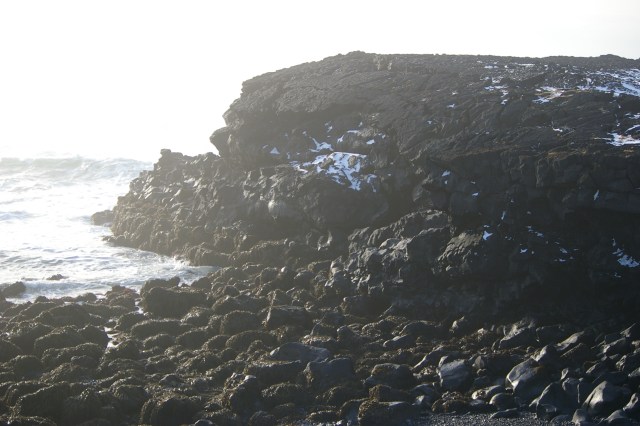
Lava Rocks on the Shore

Seeing the twin peaks of Lóndrangar is certainly an amazing sight and pictures don’t truly do it justice. Centuries of erosion have left these volcanic rocks looming over the edge of the coastline. The entire area is volcanic crater that has been enveloped by the ocean and now only lava rocks remain. We were fortunate to see Lóndrangar from two angles, first looking at them with the ocean sitting behind them and then later from the Malariff Lighthouse. Since we were there during the winter, the black lava rocks really stood out against the snowy landscape and glacial mountains off in the distance.

IMGP7013
Rock Formations at Lóndrangar

dsc_0104_day3
Blue Sky and Lighthouse

dsc_0100_day3
Lóndrangar with Ocean in the Background

Next we drove to the Malariff Lighthouse, which is truly dramatic and well worth visiting. You are able to walk all around the lighthouse, which stands as a lonely sentry to protect ships from crashing into the rocky coast. As we arrived, the cloudy skies temporarily parted to provide an amazing backdrop to the white lighthouse. It is supposed to be a great location to see different water birds and even seals, but perhaps the weather was too cold for even them during our visit.

imgp7017
Sun Along the Shore

imgp7010
Rough Water

imgp7014
View of Lóndrangar from the Lighthouse

After walking around the lighthouse, we continued on to walk down to the shoreline and see the waves crashing against the lava lined coast. It certainly provides a sense of how powerful the ocean can be in this rugged land. It also provides evidence as to the clear need for the lighthouse when you see the waves splashing high above the rocks along the shore. Iceland is such a beautiful country and this little snippet of the coast will give you a true sense of the destructive forces that have created not only Iceland, but the world as a whole.

The Unique Architecture in the Historic District of Plovdiv in Bulgaria

It is a full-day trip to visit the historic town of Plovdiv in Bulgaria from the capital city of Sofia, but it is definitely worth the time that it takes. The town, like so much of the region, has a history that goes back to the Trojans, then the Greeks, followed by the Romans, and eventually the Turks, not taking into account the modern occupations including the Soviet Union. That history and amalgamation of cultures is part of what makes a tour of Plovdiv fascinating, but today it is also a vibrant shopping area with lots of shops and restaurants literally built on top of the ruins of an enormous, ancient sports arena. Bring comfortable shoes with you as you will be doing a fair amount of walking up and down the hills on which the city center is built.

View of the Amphitheater
Ornate Window on a Historic House in the Old Town
Walking the Cobblestone Streets
Virgin Mary Church

The first thing that you will notice is the striking architecture of the local homes that line the cobblestone streets. They have a definitive style based on the Bulgarian Renaissance architectural style and often feature vibrant colors and details around the windows that overlook the street. After walking through the ancient streets of the city’s old town, you will reach the large Roman amphitheater, which is remarkably well preserved. It is still used for concerts and events today and the college for the arts is located next to the entrance to the amphitheater.

Another Colorful Home
Model of the Stadium
Column Under the Walking Street
The Stage of the Amphitheater

As you continue to the main street that runs the length of the old town, you will be walking above the ruins of a huge stadium where chariot races were once held. There are various points along the street where you can see and even walk down into the ruins in order to get a closer look. The original stadium actually stretched the entire length of the street with the shops above, which gives you an idea of just how large the stadium was back when it was in use. We stopped at a local restaurant for lunch and enjoyed watching all of the tourists that were walking the street on a very busy day in Plovdiv.

Walking Up the Hill Towards the Heart of Old Town
Statue of Milo the Crazy
Another House
City Hall and Fountain

It takes 8 to 10 hours roundtrip to get to Plovdiv from Sofia since Plovdiv is located in central Bulgaria while Sofia is located in western Bulgaria. As with many places in Europe, Plovdiv is a combination of historic sites and a modern city. If it were possible, we would recommend planning your trip at a time when a concert was taking place in the amphitheater as it would make for a really unique experience. We certainly enjoyed our time walking the streets of the historic old town and seeing all of the interesting sites and buildings that are located there.

Sign Within Plovdiv
Seats for the Stadium that are Exposed Along the Street
Mural on One of the Walls
Such Interesting Architecture